
Inequality is rampant in American life and is a key topic in the presidential campaign, but Harvard faculty members have been exploring its many facets for decades, and suggesting some solutions. To read the full series, visit
آپ کو یہ بھی پسند آ سکتا ہے
SEAS Videos
SEAS Graduate Students
Kids Songs by CoComelon
CoComelon
SEAS Campaign Videos
SEAS Undergraduate Videos
Harvard Kennedy School: Ask What You Can Do
6th Annual New England Tuberculosis Symposium | HGHI
IECO-RCC International Colloquium
SS 1 Chemistry
Primary 3 Mathematics
Primary 1 Mathematics
Best Nursery Rhymes & Kids Songs - by BabyBus
Bengali Kids Cartoon Videos
Introduction to Software Engineering
ChuChu & Friends in Storytime Adventures - ChuChu TV
Introduction to Artificial Intelligence (AI)
Alphabet (ABC) Songs by CoComelon
CocoMelon | Little Baby Bum | Blippi - Nursery Rhymes & Kids TV Shows
Learn English With Disney Movies
CoComelon - Happy Holidays
Educational Videos for Children - Lingokids
The Original CoComelon Alphabet Series
CoComelon For Journeys
تبصرے
3 تبصرے
Ebonie Woolcock, a Harvard Medical School instructor in obstetrics, gynecology, and reproductive biology, works today not far from where she grew up in Boston’s Dorchester neighborhood. A physician at the Bowdoin Street Health Center, Woolcock is fighting a personal battle to close the health gaps that result in America’s poor and minority communities getting less access to care, poorer quality of it, and, ultimately, worse health.
Education may be the key to solving broader American inequality, but we have to solve educational inequality first. Harvard’s Ronald Ferguson, director of The Achievement Gap Initiative at Harvard University, says there is progress being made, there are encouraging examples to emulate, that an early start is critical, and that a lot of hard work lies ahead. But he also says, “There’s nothing more important we can do."
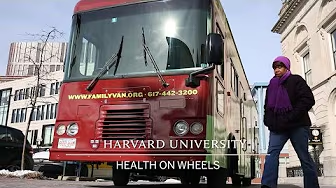
Harvard Medical School’s Family Van reaches Boston’s underserved neighborhoods in the most direct way possible: by driving there. The van’s screening and referral services help bridge health inequalities by connecting local residents with a health care system that may otherwise seem distant and inaccessible.