
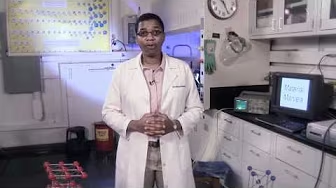
Material Marvels explores some amazing technology in engineering with Associate Professor, Ainissa Ramirez.
Maaari Mo Ring Magustuhan
KS2 Drama
Alphabet (ABC) Songs by CoComelon
Sheriff Labrador - Kids Cartoon | Safety Cartoon for Kids
CocoMelon | Little Baby Bum | Blippi - Nursery Rhymes & Kids TV Shows
Learn English With Disney Movies
Test Your English with TV Series and Movies
CoComelon #shorts
All New Akili & Me
Sheriff Labrador Popular Live Stream
🎬⭐️ BRAND NEW Episodes | Talking Tom Shorts: Season 3 🤣💙
How to Be a Better Human
Sleepytime! 💤 | Learn Words with Yakka Dee |BBC Kids
Primary 1 Mathematics
SS 3 English
SS 1 Business & Finance
Learn English with Movies
Understanding the World
Top Videos
Personal, social and emotional development
Year6 Music
Go Figure
Kids Songs by CoComelon
CoComelon
The Original CoComelon Alphabet Series
Mga Komento
6 Mga Komento
As millions of viewers settle in to watch the Super Bowl, Yale scientist Ainissa Ramirez describes the physics behind the game and what gives a football its speed, drag and spin. Tune in now to this special Super Bowl edition of Science Xplained.
Associate Professor of Mechanical Engineering & Materials Science at Yale, Dr. Ainissa Ramirez, discusses how a layer of carbon that is one atom thick, called graphene, will revolutionize our lives. Discovered by scientists that won the Nobel prize, graphene can be found in everyday pencils, is incredibly strong and super-conductive and will make blazingly fast computers and video games a reality.
Associate Professor of Mechanical Engineering & Materials Science at Yale, Dr. Ainissa Ramirez (@blkgrlphd), talks about shape memory alloys. These "metals with a memory" are used in space, in robots and even in your mouth!
Associate Professor of Mechanical Engineering & Materials Science at Yale, Dr. Ainissa Ramirez, demonstrates the heat absorption properties of the space shuttle's ceramic tiles.
In this short video, Yale engineer, Dr. Ainissa Ramirez, shows how sandwiches of silicon (in solar cells) can create energy from sunlight and help curb our dependence on oil.
The Nobel Prize in Chemistry went to quasicrystals. But what are they? Dr. Ainissa Ramirez guides us into the strange world where atoms arrange themselves in forbidden ways and create materials with weird properties.